

• About
  • Advertise
  • Privacy & Policy
  • Contact
Brain & Spine Insights
  • Home
  • Articles
  • About
  • Contact
  • Gallery
No Result
View All Result
  • Home
  • Articles
  • About
  • Contact
  • Gallery
No Result
View All Result
Brain & Spine Insights
No Result
View All Result
Home Neurotrauma

Head Injury After a Road Accident: Warning Signs You Should Never Ignore

Dr Amrit Saikia by Dr Amrit Saikia
October 4, 2026
in Neurotrauma
0
Head Injury After a Road Accident: Warning Signs You Should Never Ignore
0
SHARES
0
VIEWS
Share on FacebookShare on Twitter

A road traffic accident can cause serious injuries even when there is little or no visible damage to the head. A person may appear conscious and normal immediately after an accident, while an underlying brain injury or internal bleeding may still be developing.

Head injuries should therefore never be taken lightly. Recognizing warning signs early and getting appropriate medical evaluation can be extremely important.

What Happens After a Head Injury?

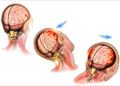
A sudden impact can cause the brain to move inside the skull. Depending on the force and direction of the impact, this may result in a concussion, brain contusion, skull fracture, or bleeding inside the brain.

The severity of the injury is not always obvious from an external examination. Some serious injuries may initially produce only mild symptoms and become more noticeable over time.

Warning Signs After a Head Injury

After a road accident, medical attention should be sought urgently if a person develops:

  • Persistent or worsening headache
  • Repeated vomiting
  • Loss of consciousness
  • Increasing drowsiness or difficulty staying awake
  • Confusion or unusual behavior
  • Memory problems
  • Seizures
  • Weakness or numbness of an arm or leg
  • Difficulty speaking or understanding speech
  • Vision problems
  • Difficulty walking or maintaining balance
  • Clear fluid or blood coming from the nose or ears
  • Unequal pupil size

These symptoms can indicate a more serious brain injury and should not be ignored.

Can a Person Have a Serious Brain Injury Without Losing Consciousness?

Yes. Loss of consciousness is not required for a serious brain injury to occur.

A person can remain awake and communicate normally while still having conditions such as a brain contusion or intracranial bleeding. This is why the symptoms that develop after an accident are important and should be carefully monitored.

Why Imaging May Be Necessary

Depending on the patient’s symptoms, neurological examination, age, mechanism of injury, and other risk factors, a doctor may recommend brain imaging such as a CT scan.

A CT scan can help identify conditions such as:

  • Intracranial bleeding
  • Skull fractures
  • Brain swelling
  • Brain contusions
  • Other traumatic abnormalities

Not every head injury requires imaging, but the decision should be made by a qualified medical professional after assessing the patient.

What About Delayed Symptoms?

Some complications of head trauma may not become obvious immediately. Symptoms can develop or worsen hours after the accident.

For this reason, a person who has suffered a significant head injury should not simply assume that everything is fine because they initially feel normal.

If new neurological symptoms appear, immediate medical assessment is important.

Head Injury and Blood Thinners

People taking blood-thinning medications may have a higher risk of complications following head trauma. Even a seemingly minor injury may require medical evaluation depending on the individual’s circumstances.

Patients should inform the treating doctor about all medications they are taking.

When Is Emergency Care Needed?

Emergency medical attention is particularly important when there is loss of consciousness, repeated vomiting, seizures, worsening headache, confusion, severe drowsiness, weakness, numbness, speech difficulty, or other significant neurological changes.

After a major road traffic accident, it is also important to consider possible injuries to the neck and spine. Unnecessary movement of a person with a suspected spinal injury should be avoided until appropriate medical assistance is available.

Final Takeaway

A head injury after a road accident can range from a mild concussion to a potentially life-threatening brain injury. The absence of an obvious external wound does not necessarily mean that there is no internal injury.

If you or someone around you develops concerning symptoms after a head injury, seek urgent medical evaluation. Early recognition and appropriate treatment can help reduce the risk of serious complications.

Next Post

Brain Bleeding After a Head Injury: Symptoms You Should Never Ignore

Dr Amrit Saikia

Dr Amrit Saikia

Next Post
Brain Bleeding After a Head Injury: Symptoms You Should Never Ignore

Brain Bleeding After a Head Injury: Symptoms You Should Never Ignore

Leave a Reply Cancel reply

Your email address will not be published. Required fields are marked *

Stay Connected

  • 24k Followers
  • 99 Subscribers
  • Trending
  • Comments
  • Latest
Stem Cell Research and Regenerative Medicine: What Does the Future Hold?

Stem Cell Research and Regenerative Medicine: What Does the Future Hold?

October 4, 2026
How Medical Science Is Changing the Way We Diagnose and Treat Diseases

How Medical Science Is Changing the Way We Diagnose and Treat Diseases

October 4, 2026
Spinal Cord Injury After an Accident: Symptoms, Treatment and Recovery

Spinal Cord Injury After an Accident: Symptoms, Treatment and Recovery

October 4, 2026
Back Pain: Common Causes and When You Should See a Doctor

Back Pain: Common Causes and When You Should See a Doctor

October 4, 2026
Head Injury After a Road Accident: Warning Signs You Should Never Ignore

Head Injury After a Road Accident: Warning Signs You Should Never Ignore

0
Brain Bleeding After a Head Injury: Symptoms You Should Never Ignore

Brain Bleeding After a Head Injury: Symptoms You Should Never Ignore

0
Spinal Cord Injury After an Accident: Symptoms, Treatment and Recovery

Spinal Cord Injury After an Accident: Symptoms, Treatment and Recovery

0
How to Keep Your Brain Healthy: Simple Habits for Better Brain Function

How to Keep Your Brain Healthy: Simple Habits for Better Brain Function

0
Stem Cell Research and Regenerative Medicine: What Does the Future Hold?

Stem Cell Research and Regenerative Medicine: What Does the Future Hold?

October 4, 2026
How Medical Science Is Changing the Way We Diagnose and Treat Diseases

How Medical Science Is Changing the Way We Diagnose and Treat Diseases

October 4, 2026
Minimally Invasive Spine Surgery: Advances in Modern Spine Treatment

Minimally Invasive Spine Surgery: Advances in Modern Spine Treatment

October 4, 2026
Artificial Intelligence in Neurosurgery: How Technology Is Supporting Brain and Spine Care

Artificial Intelligence in Neurosurgery: How Technology Is Supporting Brain and Spine Care

October 4, 2026

Recent News

Stem Cell Research and Regenerative Medicine: What Does the Future Hold?

Stem Cell Research and Regenerative Medicine: What Does the Future Hold?

October 4, 2026
How Medical Science Is Changing the Way We Diagnose and Treat Diseases

How Medical Science Is Changing the Way We Diagnose and Treat Diseases

October 4, 2026
Minimally Invasive Spine Surgery: Advances in Modern Spine Treatment

Minimally Invasive Spine Surgery: Advances in Modern Spine Treatment

October 4, 2026
Artificial Intelligence in Neurosurgery: How Technology Is Supporting Brain and Spine Care

Artificial Intelligence in Neurosurgery: How Technology Is Supporting Brain and Spine Care

October 4, 2026

The Neurosurgery Journal is an educational section of dramritsaikia.in, created to share reliable and accessible information about disorders of the brain, spine and nervous system.

Follow Us

Browse by Category

  • Brain Health
  • Neurotrauma
  • Patient Guide
  • Research & Updates
  • Science
  • Spine Care

Recent News

Stem Cell Research and Regenerative Medicine: What Does the Future Hold?

Stem Cell Research and Regenerative Medicine: What Does the Future Hold?

October 4, 2026
How Medical Science Is Changing the Way We Diagnose and Treat Diseases

How Medical Science Is Changing the Way We Diagnose and Treat Diseases

October 4, 2026
  • About
  • Advertise
  • Privacy & Policy
  • Contact

© 2026 DrAmritSaikia

No Result
View All Result
  • Home
  • Articles
  • About
  • Contact
  • Gallery

© 2026 DrAmritSaikia