

• About
  • Advertise
  • Privacy & Policy
  • Contact
Brain & Spine Insights
  • Home
  • Articles
  • About
  • Contact
  • Gallery
No Result
View All Result
  • Home
  • Articles
  • About
  • Contact
  • Gallery
No Result
View All Result
Brain & Spine Insights
No Result
View All Result
Home Patient Guide

MRI or CT Scan: What Patients Should Know Before a Brain or Spine Scan

Dr Amrit Saikia by Dr Amrit Saikia
October 4, 2026
in Patient Guide
0
MRI or CT Scan: What Patients Should Know Before a Brain or Spine Scan
0
SHARES
0
VIEWS
Share on FacebookShare on Twitter

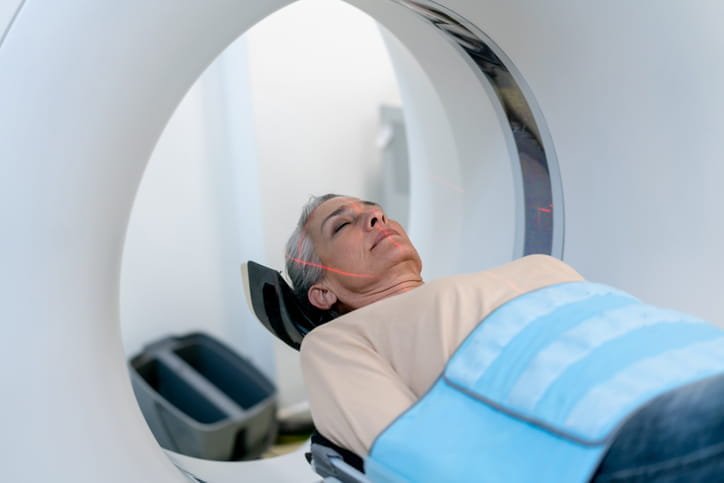
When a doctor recommends a CT scan or MRI, many patients naturally have questions. Why is the scan needed? Is it painful? Do I need to prepare beforehand? What is the difference between the two?

Understanding the purpose of these tests can help patients feel more comfortable and prepared for their evaluation.

Why Might a Doctor Recommend a Brain or Spine Scan?

CT and MRI scans provide detailed images of structures inside the body. Depending on the symptoms and clinical examination, a doctor may recommend imaging to evaluate conditions affecting the brain, spine, nerves, or surrounding structures.

Scans may be considered for problems such as:

  • Head injuries
  • Persistent or unusual headaches
  • Suspected brain bleeding
  • Spinal injuries
  • Persistent neck or back problems
  • Nerve compression
  • Certain brain or spinal conditions

The appropriate scan depends on the patient’s symptoms and the clinical situation.

What Is a CT Scan?

A CT scan uses X-rays and computer technology to create detailed images of the body.

CT scans are particularly useful in emergency situations because they are generally quick and can help identify problems such as bleeding, fractures, and other acute abnormalities.

For patients with serious head injuries, CT may be an important part of the initial evaluation.

What Is an MRI?

MRI uses a strong magnetic field and radio waves to produce detailed images of body tissues.

MRI can provide excellent images of the brain, spinal cord, discs, nerves, and other soft tissues.

Unlike CT, MRI does not use X-rays.

Is an MRI Painful?

An MRI itself is generally painless. The patient needs to remain still while the images are being taken.

The scanner can be noisy, and some people may feel uncomfortable inside the enclosed space. Patients who are anxious or have claustrophobia should inform the imaging team beforehand.

Important Information to Tell the MRI Team

Before an MRI, tell the healthcare team if you have:

  • A pacemaker or implanted medical device
  • Certain metal implants
  • Metal fragments in the body
  • Previous surgeries involving implants
  • Any possibility of pregnancy
  • Significant claustrophobia

Some implants are MRI-compatible while others may require special precautions, so providing accurate information is important.

Does Every Scan Require Contrast?

No.

Some CT or MRI examinations can be performed without contrast. In other situations, a contrast agent may be recommended to provide additional information.

The decision depends on the clinical question and the type of examination being performed.

Should You Carry Your Previous Reports?

Yes. If you have previously undergone CT scans, MRI scans, X-rays, or other relevant investigations, carrying the reports and images can be helpful.

Previous scans may allow the doctor to compare changes over time and better understand your condition.

What Should You Do After the Scan?

Most patients can return to their normal activities after routine imaging. If contrast has been used, the imaging team may provide specific instructions depending on the type of examination and your medical history.

Your doctor will

Previous Post

When Should You See a Neurosurgeon? A Simple Guide for Patients

Next Post

Preparing for Your Neurosurgery Consultation: A Simple Guide for Patients

Dr Amrit Saikia

Dr Amrit Saikia

Next Post
Preparing for Your Neurosurgery Consultation: A Simple Guide for Patients

Preparing for Your Neurosurgery Consultation: A Simple Guide for Patients

Leave a Reply Cancel reply

Your email address will not be published. Required fields are marked *

Stay Connected

  • 24k Followers
  • 99 Subscribers
  • Trending
  • Comments
  • Latest
Stem Cell Research and Regenerative Medicine: What Does the Future Hold?

Stem Cell Research and Regenerative Medicine: What Does the Future Hold?

October 4, 2026
How Medical Science Is Changing the Way We Diagnose and Treat Diseases

How Medical Science Is Changing the Way We Diagnose and Treat Diseases

October 4, 2026
Spinal Cord Injury After an Accident: Symptoms, Treatment and Recovery

Spinal Cord Injury After an Accident: Symptoms, Treatment and Recovery

October 4, 2026
Back Pain: Common Causes and When You Should See a Doctor

Back Pain: Common Causes and When You Should See a Doctor

October 4, 2026
Head Injury After a Road Accident: Warning Signs You Should Never Ignore

Head Injury After a Road Accident: Warning Signs You Should Never Ignore

0
Brain Bleeding After a Head Injury: Symptoms You Should Never Ignore

Brain Bleeding After a Head Injury: Symptoms You Should Never Ignore

0
Spinal Cord Injury After an Accident: Symptoms, Treatment and Recovery

Spinal Cord Injury After an Accident: Symptoms, Treatment and Recovery

0
How to Keep Your Brain Healthy: Simple Habits for Better Brain Function

How to Keep Your Brain Healthy: Simple Habits for Better Brain Function

0
Stem Cell Research and Regenerative Medicine: What Does the Future Hold?

Stem Cell Research and Regenerative Medicine: What Does the Future Hold?

October 4, 2026
How Medical Science Is Changing the Way We Diagnose and Treat Diseases

How Medical Science Is Changing the Way We Diagnose and Treat Diseases

October 4, 2026
Minimally Invasive Spine Surgery: Advances in Modern Spine Treatment

Minimally Invasive Spine Surgery: Advances in Modern Spine Treatment

October 4, 2026
Artificial Intelligence in Neurosurgery: How Technology Is Supporting Brain and Spine Care

Artificial Intelligence in Neurosurgery: How Technology Is Supporting Brain and Spine Care

October 4, 2026

Recent News

Stem Cell Research and Regenerative Medicine: What Does the Future Hold?

Stem Cell Research and Regenerative Medicine: What Does the Future Hold?

October 4, 2026
How Medical Science Is Changing the Way We Diagnose and Treat Diseases

How Medical Science Is Changing the Way We Diagnose and Treat Diseases

October 4, 2026
Minimally Invasive Spine Surgery: Advances in Modern Spine Treatment

Minimally Invasive Spine Surgery: Advances in Modern Spine Treatment

October 4, 2026
Artificial Intelligence in Neurosurgery: How Technology Is Supporting Brain and Spine Care

Artificial Intelligence in Neurosurgery: How Technology Is Supporting Brain and Spine Care

October 4, 2026

The Neurosurgery Journal is an educational section of dramritsaikia.in, created to share reliable and accessible information about disorders of the brain, spine and nervous system.

Follow Us

Browse by Category

  • Brain Health
  • Neurotrauma
  • Patient Guide
  • Research & Updates
  • Science
  • Spine Care

Recent News

Stem Cell Research and Regenerative Medicine: What Does the Future Hold?

Stem Cell Research and Regenerative Medicine: What Does the Future Hold?

October 4, 2026
How Medical Science Is Changing the Way We Diagnose and Treat Diseases

How Medical Science Is Changing the Way We Diagnose and Treat Diseases

October 4, 2026
  • About
  • Advertise
  • Privacy & Policy
  • Contact

© 2026 DrAmritSaikia

No Result
View All Result
  • Home
  • Articles
  • About
  • Contact
  • Gallery

© 2026 DrAmritSaikia