
• About
  • Advertise
  • Privacy & Policy
  • Contact
Brain & Spine Insights
  • Home
  • Articles
  • About
  • Contact
  • Gallery
No Result
View All Result
  • Home
  • Articles
  • About
  • Contact
  • Gallery
No Result
View All Result
Brain & Spine Insights
No Result
View All Result
Home Patient Guide

After Neurosurgery: Important Recovery Tips for Patients and Families

Dr Amrit Saikia by Dr Amrit Saikia
October 4, 2026
in Patient Guide
0
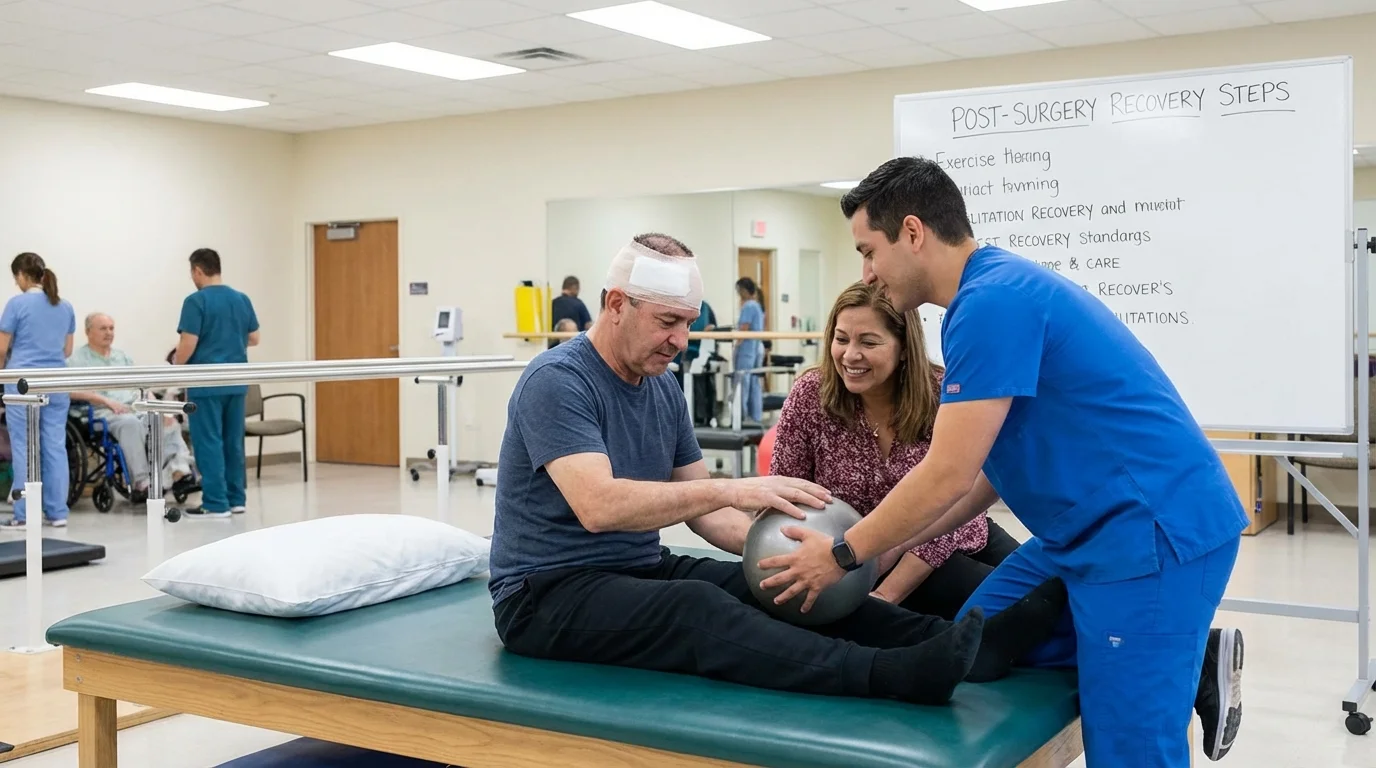
After Neurosurgery: Important Recovery Tips for Patients and Families
0
SHARES
0
VIEWS
Share on FacebookShare on Twitter

Undergoing brain or spine surgery can be an important step in treating a neurological condition. However, recovery does not end when the operation is completed. Proper follow-up, medication, activity, nutrition, and observation are all important parts of recovery.

Every patient’s recovery is different, and the treating neurosurgeon should always provide the final instructions based on the individual condition and type of surgery.

Follow Your Doctor’s Instructions

After surgery, patients may receive specific instructions regarding medicines, wound care, physical activity, diet, and follow-up appointments.

Following these instructions carefully can help support a safe recovery.

Do not stop prescribed medicines or change their dosage without discussing it with your doctor.

Take Medicines as Prescribed

After surgery, medicines may be prescribed for pain, infection prevention, seizures, or other specific conditions.

Take them according to the prescribed schedule and inform your doctor if you experience unexpected side effects.

If you are unsure about any medicine, ask your healthcare team before making changes.

Take Adequate Rest

Feeling tired or weak during the early recovery period can be common.

Give your body enough time to recover and gradually return to normal activities according to your doctor’s advice.

Avoid pushing yourself too quickly, even if you start feeling better.

Keep the Surgical Wound Clean

Follow the wound-care instructions provided by your healthcare team.

Watch for signs such as:

  • Increasing redness
  • Swelling
  • Persistent bleeding
  • Fluid or pus from the wound
  • Increasing pain
  • Fever

If you notice concerning changes around the surgical site, contact your medical team.

Gradually Resume Physical Activity

The timing for returning to normal activity depends on the type of surgery and your overall condition.

Your doctor may recommend gradually increasing walking and other activities while avoiding heavy lifting, strenuous exercise, or specific movements for a certain period.

Do not resume demanding physical activities simply because you feel better.

Maintain a Healthy Diet

Good nutrition supports recovery.

Try to maintain a balanced diet containing adequate protein, vegetables, fruits, whole grains, and fluids, unless your doctor has advised specific dietary restrictions.

If you have difficulty eating or swallowing, inform your healthcare team.

Keep Your Follow-Up Appointments

Follow-up appointments allow your doctor to assess recovery, review symptoms, examine the surgical site when necessary, and evaluate imaging or other test results.

Do not skip scheduled follow-ups even if you are feeling well.

Watch for New or Worsening Symptoms

Patients and family members should pay attention to significant changes after surgery.

Seek urgent medical attention if there is:

  • New or worsening weakness
  • Difficulty speaking
  • Seizures
  • Loss of consciousness
  • Severe or rapidly worsening headache
  • Repeated vomiting
  • Significant confusion
  • New difficulty walking
  • Breathing difficulties
  • Other sudden neurological changes

The appropriate response depends on the patient’s condition, so urgent symptoms should not be managed at home without medical advice.

Emotional Recovery Matters Too

Recovery is not only physical. Some patients may feel anxious, frustrated, tired, or emotionally overwhelmed after surgery.

Support from family and friends can be helpful. If significant emotional difficulties persist, discuss them with your healthcare professional.

Final Thoughts

Recovery after neurosurgery takes time and varies from patient to patient. Following medical advice, taking medicines correctly, attending follow-up appointments, maintaining healthy habits, and recognizing warning signs are important parts of the recovery process.

Never hesitate to contact your healthcare team if you are concerned about a new or worsening symptom after surgery.

Category: Patient Guide
Suggested Tags: Patient Guide, Neurosurgery, Postoperative Care, Recovery, Brain Surgery, Spine Surgery

Previous Post

Preparing for Your Neurosurgery Consultation: A Simple Guide for Patients

Next Post

Back Pain: Common Causes and When You Should See a Doctor

Dr Amrit Saikia

Dr Amrit Saikia

Next Post
Back Pain: Common Causes and When You Should See a Doctor

Back Pain: Common Causes and When You Should See a Doctor

Leave a Reply Cancel reply

Your email address will not be published. Required fields are marked *

Stay Connected

  • 24k Followers
  • 99 Subscribers
  • Trending
  • Comments
  • Latest
Stem Cell Research and Regenerative Medicine: What Does the Future Hold?

Stem Cell Research and Regenerative Medicine: What Does the Future Hold?

October 4, 2026
How Medical Science Is Changing the Way We Diagnose and Treat Diseases

How Medical Science Is Changing the Way We Diagnose and Treat Diseases

October 4, 2026
Spinal Cord Injury After an Accident: Symptoms, Treatment and Recovery

Spinal Cord Injury After an Accident: Symptoms, Treatment and Recovery

October 4, 2026
Back Pain: Common Causes and When You Should See a Doctor

Back Pain: Common Causes and When You Should See a Doctor

October 4, 2026
Head Injury After a Road Accident: Warning Signs You Should Never Ignore

Head Injury After a Road Accident: Warning Signs You Should Never Ignore

0
Brain Bleeding After a Head Injury: Symptoms You Should Never Ignore

Brain Bleeding After a Head Injury: Symptoms You Should Never Ignore

0
Spinal Cord Injury After an Accident: Symptoms, Treatment and Recovery

Spinal Cord Injury After an Accident: Symptoms, Treatment and Recovery

0
How to Keep Your Brain Healthy: Simple Habits for Better Brain Function

How to Keep Your Brain Healthy: Simple Habits for Better Brain Function

0
Stem Cell Research and Regenerative Medicine: What Does the Future Hold?

Stem Cell Research and Regenerative Medicine: What Does the Future Hold?

October 4, 2026
How Medical Science Is Changing the Way We Diagnose and Treat Diseases

How Medical Science Is Changing the Way We Diagnose and Treat Diseases

October 4, 2026
Minimally Invasive Spine Surgery: Advances in Modern Spine Treatment

Minimally Invasive Spine Surgery: Advances in Modern Spine Treatment

October 4, 2026
Artificial Intelligence in Neurosurgery: How Technology Is Supporting Brain and Spine Care

Artificial Intelligence in Neurosurgery: How Technology Is Supporting Brain and Spine Care

October 4, 2026

Recent News

Stem Cell Research and Regenerative Medicine: What Does the Future Hold?

Stem Cell Research and Regenerative Medicine: What Does the Future Hold?

October 4, 2026
How Medical Science Is Changing the Way We Diagnose and Treat Diseases

How Medical Science Is Changing the Way We Diagnose and Treat Diseases

October 4, 2026
Minimally Invasive Spine Surgery: Advances in Modern Spine Treatment

Minimally Invasive Spine Surgery: Advances in Modern Spine Treatment

October 4, 2026
Artificial Intelligence in Neurosurgery: How Technology Is Supporting Brain and Spine Care

Artificial Intelligence in Neurosurgery: How Technology Is Supporting Brain and Spine Care

October 4, 2026

The Neurosurgery Journal is an educational section of dramritsaikia.in, created to share reliable and accessible information about disorders of the brain, spine and nervous system.

Follow Us

Browse by Category

  • Brain Health
  • Neurotrauma
  • Patient Guide
  • Research & Updates
  • Science
  • Spine Care

Recent News

Stem Cell Research and Regenerative Medicine: What Does the Future Hold?

Stem Cell Research and Regenerative Medicine: What Does the Future Hold?

October 4, 2026
How Medical Science Is Changing the Way We Diagnose and Treat Diseases

How Medical Science Is Changing the Way We Diagnose and Treat Diseases

October 4, 2026
  • About
  • Advertise
  • Privacy & Policy
  • Contact

© 2026 DrAmritSaikia

No Result
View All Result
  • Home
  • Articles
  • About
  • Contact
  • Gallery

© 2026 DrAmritSaikia