

• About
  • Advertise
  • Privacy & Policy
  • Contact
Brain & Spine Insights
  • Home
  • Articles
  • About
  • Contact
  • Gallery
No Result
View All Result
  • Home
  • Articles
  • About
  • Contact
  • Gallery
No Result
View All Result
Brain & Spine Insights
No Result
View All Result
Home Brain Health

Exercise and Brain Health: How Physical Activity Supports Your Brain

Dr Amrit Saikia by Dr Amrit Saikia
October 4, 2026
in Brain Health
0
Exercise and Brain Health: How Physical Activity Supports Your Brain
0
SHARES
0
VIEWS
Share on FacebookShare on Twitter

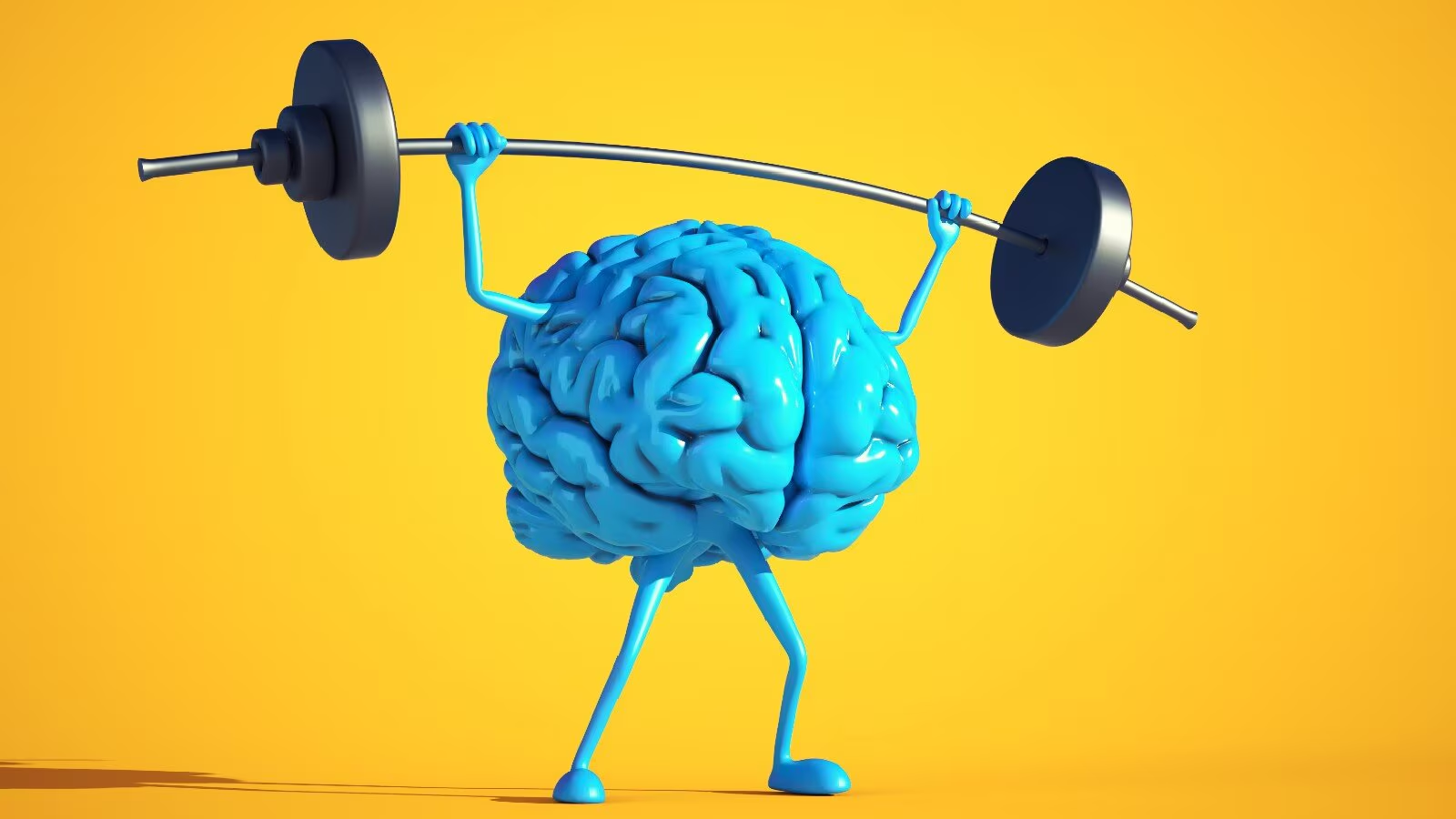
When we think about exercise, we often focus on stronger muscles, better fitness, or weight management. But regular physical activity is also closely connected with brain health.

Exercise supports cardiovascular health, improves overall fitness, and can contribute to better mood, sleep, attention, and cognitive function.

How Does Exercise Benefit the Brain?

The brain depends on a healthy blood supply and a well-functioning cardiovascular system. Regular physical activity supports these systems and can contribute to overall brain health.

Exercise may also help with:

  • Concentration and attention
  • Mood and emotional well-being
  • Sleep quality
  • Memory and learning
  • Stress management
  • Overall energy levels

What Type of Exercise Is Helpful?

You do not necessarily need an intense workout to support your brain. Different forms of physical activity can be beneficial.

Walking

Brisk walking is a simple and accessible way to remain physically active. Even regular daily walks can contribute to overall fitness.

Aerobic Exercise

Activities such as cycling, swimming, jogging, or dancing can improve cardiovascular fitness.

Strength Training

Resistance exercises can help maintain muscle strength, balance, and physical independence as we age.

Balance and Flexibility Exercises

Stretching, yoga, and balance-focused activities can support mobility and help reduce the risk of falls.

How Much Exercise Should You Do?

The ideal amount of activity depends on your age, health, fitness level, and individual circumstances.

For many adults, a combination of regular moderate-intensity aerobic activity and muscle-strengthening exercises is a useful goal.

If you have an existing medical condition or have been physically inactive for a long time, it may be appropriate to discuss a suitable exercise plan with a healthcare professional.

Exercise, Stress and Sleep

Physical activity can have benefits beyond fitness. Regular exercise may help manage everyday stress and can support healthier sleep patterns.

Better sleep and lower stress can, in turn, help improve concentration and daytime mental performance.

Start Small and Stay Consistent

You do not have to completely change your routine overnight.

You can start with simple steps:

  • Take a daily walk
  • Use stairs when appropriate
  • Spend less time sitting continuously
  • Add simple stretching exercises
  • Gradually increase activity as your fitness improves

Consistency is more important than trying to do too much at once.

Exercise and Brain Health as We Age

Maintaining physical activity throughout adulthood can support healthy aging. Staying active helps maintain mobility and cardiovascular health and can contribute to overall quality of life.

Combined with adequate sleep, a balanced diet, mental stimulation, and regular health check-ups, exercise can be an important part of a brain-healthy lifestyle.

Final Thoughts

Your brain and body are closely connected. Regular physical activity is one of the practical habits that can support both.

You do not need an expensive gym membership or complicated workout routine to start taking care of your brain. Even simple, consistent movement can be a valuable part of a healthy lifestyle.

Category: Brain Health
Suggested Tags: Brain Health, Exercise, Physical Activity, Healthy Brain, Cognitive Health, Healthy Aging

Previous Post

How Stress Affects Your Brain: Understanding the Impact of Chronic Stress

Next Post

When Should You See a Neurosurgeon? A Simple Guide for Patients

Dr Amrit Saikia

Dr Amrit Saikia

Next Post
When Should You See a Neurosurgeon? A Simple Guide for Patients

When Should You See a Neurosurgeon? A Simple Guide for Patients

Leave a Reply Cancel reply

Your email address will not be published. Required fields are marked *

Stay Connected

  • 24k Followers
  • 99 Subscribers
  • Trending
  • Comments
  • Latest
Stem Cell Research and Regenerative Medicine: What Does the Future Hold?

Stem Cell Research and Regenerative Medicine: What Does the Future Hold?

October 4, 2026
How Medical Science Is Changing the Way We Diagnose and Treat Diseases

How Medical Science Is Changing the Way We Diagnose and Treat Diseases

October 4, 2026
Spinal Cord Injury After an Accident: Symptoms, Treatment and Recovery

Spinal Cord Injury After an Accident: Symptoms, Treatment and Recovery

October 4, 2026
Back Pain: Common Causes and When You Should See a Doctor

Back Pain: Common Causes and When You Should See a Doctor

October 4, 2026
Head Injury After a Road Accident: Warning Signs You Should Never Ignore

Head Injury After a Road Accident: Warning Signs You Should Never Ignore

0
Brain Bleeding After a Head Injury: Symptoms You Should Never Ignore

Brain Bleeding After a Head Injury: Symptoms You Should Never Ignore

0
Spinal Cord Injury After an Accident: Symptoms, Treatment and Recovery

Spinal Cord Injury After an Accident: Symptoms, Treatment and Recovery

0
How to Keep Your Brain Healthy: Simple Habits for Better Brain Function

How to Keep Your Brain Healthy: Simple Habits for Better Brain Function

0
Stem Cell Research and Regenerative Medicine: What Does the Future Hold?

Stem Cell Research and Regenerative Medicine: What Does the Future Hold?

October 4, 2026
How Medical Science Is Changing the Way We Diagnose and Treat Diseases

How Medical Science Is Changing the Way We Diagnose and Treat Diseases

October 4, 2026
Minimally Invasive Spine Surgery: Advances in Modern Spine Treatment

Minimally Invasive Spine Surgery: Advances in Modern Spine Treatment

October 4, 2026
Artificial Intelligence in Neurosurgery: How Technology Is Supporting Brain and Spine Care

Artificial Intelligence in Neurosurgery: How Technology Is Supporting Brain and Spine Care

October 4, 2026

Recent News

Stem Cell Research and Regenerative Medicine: What Does the Future Hold?

Stem Cell Research and Regenerative Medicine: What Does the Future Hold?

October 4, 2026
How Medical Science Is Changing the Way We Diagnose and Treat Diseases

How Medical Science Is Changing the Way We Diagnose and Treat Diseases

October 4, 2026
Minimally Invasive Spine Surgery: Advances in Modern Spine Treatment

Minimally Invasive Spine Surgery: Advances in Modern Spine Treatment

October 4, 2026
Artificial Intelligence in Neurosurgery: How Technology Is Supporting Brain and Spine Care

Artificial Intelligence in Neurosurgery: How Technology Is Supporting Brain and Spine Care

October 4, 2026

The Neurosurgery Journal is an educational section of dramritsaikia.in, created to share reliable and accessible information about disorders of the brain, spine and nervous system.

Follow Us

Browse by Category

  • Brain Health
  • Neurotrauma
  • Patient Guide
  • Research & Updates
  • Science
  • Spine Care

Recent News

Stem Cell Research and Regenerative Medicine: What Does the Future Hold?

Stem Cell Research and Regenerative Medicine: What Does the Future Hold?

October 4, 2026
How Medical Science Is Changing the Way We Diagnose and Treat Diseases

How Medical Science Is Changing the Way We Diagnose and Treat Diseases

October 4, 2026
  • About
  • Advertise
  • Privacy & Policy
  • Contact

© 2026 DrAmritSaikia

No Result
View All Result
  • Home
  • Articles
  • About
  • Contact
  • Gallery

© 2026 DrAmritSaikia